
Eat High Cholesterol Eggs to
Lower Risk of Heart Attack!
The High Cholesterol Eggs Myth.
The cholesterol and eggs myth should have been shattered years ago.
It came about because of the mistaken belief that the saturated fat in eggs caused increased cholesterol, and cholesterol caused the clogging of our arteries.
Contrary to what we have been told for years by the "experts", high cholesterol eggs are loaded with vitamins and minerals, and are essential for optimal heart health.
If you have been cutting back on eggs for fear that they would increase your bad cholesterol you have been cheated out of some enjoyable high quality nutrition.
High cholesterol eggs have been proven to benefit heart health by improving both LDL cholesterol, commonly called the bad cholesterol, and HDL cholesterol. The high HDL cholesterol in eggs is so powerful I have given it the title of Superman Cholesterol.
New research on high cholesterol eggs surprises the skeptics.
Not convinced yet? A recent study of the cholesterol found in eggs that was conducted by University of Connecticut researchers has come up with "eggciting" news. They found that the cholesterol in eggs will actually lower your risk of having a stroke or heart attack!
The lead researcher in the study, Dr. Christine M Greene, PhD, MBA, CSCS, Adjunct Professor, University of Connecticut Health Care Center Department of Medicine.
This means that the cholesterol of those who enjoyed eggs actually reduced their risks of heart disease. The high cholesterol in eggs was transformed into a "guardian angel" that sucked out the bad cholesterol that was creating the artery clogging plaque.
The High Cholesterol Eggs puzzle solved.
Scientists at Berkeley Heart Lab in Berkeley, California took on the project of solving the cholesterol puzzle. These researchers conducted landmark research into the inner workings of cholesterol "particles."
What they discovered was very surprising. The found that small dense cholesterol particles, which are named APO B, easily enter the heart artery walls and form plaque that can cause a heart stopping clot.
But here's where it gets real interesting. There are larger particles that are buoyant known as APO A1 that reverse this process.
As an illustration think of the bad cholesterol as marbles covered with honey that stick to the artery walls and the good HDL cholesterol as more like a hungry marshmallow.
In a nutshell the more APOA1 cholesterol particles you have the lower will be your risk of having a heart attack! And APO1 is found mostly in HDL cholesterol.
The Interheart Study which studied 29,000 persons throughout the world to discover the primary causes of heart disease shows the number one risk of heart disease is a poor ratio of APO B to APO A1.
Here's a few facts about the amazing benefits of eggs.
- High Cholesterol eggs are good for the eyes.
- Only one egg a day may prevent macular degeneration and lower risk of cataracts.
- In another study, consumption of least 6 eggs per week lowered the risk of breast cancer in women by 44%.
- Deficiencies in the nutrients eggs provide have been associated with risk of cancer, cardiovascular disease and Alzheimer's disease.
- Regular consumption of eggs may help prevent blood clots, stroke, and heart attacks.
So here's a salute to eggs, the incredible, editable food that reduces bad cholesterol and improves the good HDLs. Nearly every day I enjoy them, usually boiled, fried in butter or deviled. Why don't you join me for excellent heart health!
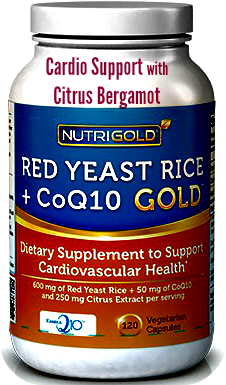
Try the New Cardio Support Formula
absolutely risk free! This amazing new discovery by Italian researchers Improves the Good HDL cholesterol, lowers Triglycerides and more! ON SALE NOW in our
Heart Supplement Store! Click Here
Clinical Studies and Resources
University of Connecticut researchersThe INTERHEART Study
Berkeley Heart Lab in Berkeley,California