| |||||||||
|
Niacin Does More Than |
||||||||

 A survivor unlocks the
mystery of niacin
A survivor unlocks the
mystery of niacin|
|
I'm Gene Millen. In 1990 a heart surgeon sawed open my chest and stitched in bypasses to six of my favorite heart arteries.
It wasn't as much fun as you might think...and started me on a journey to helping others avoid my mistakes.
My experience in exercise weight loss includes eleven years working with hundreds of people in the Vital Life Center, a health and wellness club for the "over 50 crowd.
There are a number of specific natural medicines that effectively lower cholesterol levels. One of the best of these is policosanol, which lowers LDL cholesterol and has been clinically proven to improve HDL cholesterol. Policosanol and niacin make a great combination.
Niacin does more than lower cholesterol!
The cholesterol lowering activity of niacin was first described in the 1950s. It is now known that
it does much more than lower total cholesterol.
-
Specifically, this heart supplement has been shown to lower LDL cholesterol, Lp(a) lipoprotein, triglyceride, and fibrinogen levels while simultaneously raising HDL cholesterol levels.
-
To reduce flushing - Inositol hexaniacinate
Inositol hexaniacinate is a form of niacin that has long been used in Europe to lower cholesterol levels. It is much better tolerated, in terms of both flushing and, more importantly, long-term side-effects. -
HDLs increased 33%
The percentage increase in HDL cholesterol, a more significant indicator for coronary heart disease, was dramatically in favor of niacin (33% vs. 7%). -
Lp(a) lipoprotein levels dropped 35%
While niacin produced a 35% reduction in Lp(a) lipoprotein levels, lovastatin did not produce any effect. Other studies have shown that niacin can lower Lp(a) levels by an average of 38%.2,3 -
Other occasional side-effects of niacin in higher doses include gastric irritation, nausea, and liver damage.
Click here to buy Niacin at the Best Price

 Did you know
that statin
drugs such
as Lipitor,
Crestor or
their
generic
cousins can
rob you of
Did you know
that statin
drugs such
as Lipitor,
Crestor or
their
generic
cousins can
rob you of
Co Q10!
If you are taking any of the statin family of drugs to lower your cholesterol you should not be without CoQ10.
Other drugs, such as beta blockers and some antidepressants, also interfere with Coenzyme Q10. If you are taking Lipitor, Crestor or Vytorin and are not taking CoQ10 click here.
Coenzyme Q10 (CoQ10) is one of the most potent antioxidants known. It provides the "energizing spark" that enables the heart muscle to pump blood more efficiently, and it's a great scavenger of free radicals.
More than 100 clinical studies at major universities and hospitals have documented the actions of Coenzyme Q10.
Bio-availability is the key.
No supplement will help you if your body can't use it
effectively. CoQ10 is a notoriously bulky nutrient that's quite hard
to absorb and therefore the type of supplement you choose can
make all the difference.
New Form of Coenzyme Q10 Announced by Dr. Al
Sears!
Al Sears, MD, graduated from the University of South
Florida, College of Medicine with honors in Internal
Medicine, Neurology, Psychiatry and Physical Medicine.
Dr. Sears is Board Certified in Anti-Aging Medicine a member
of the American Academy of Anti-Aging Medicine.
Dr. Sears has been a lifelong advocate of nutritional
supplementation and exercise programs. He is an ACE
certified fitness trainer, has a thriving practice in
Florida and has written several books.
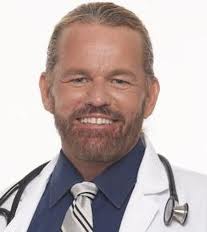 Dr. Sears says, "If You’re Taking the Wrong Kind of
CoQ10 You May Be Wasting Your Money!"
Dr. Sears says, "If You’re Taking the Wrong Kind of
CoQ10 You May Be Wasting Your Money!"
"The many health benefits of taking Coenzyme Q10 are already well established… Yet many patients I talk to in my practice tell me they don’t feel any different after they start taking CoQ10.
"When they show me the bottle, I immediately know why.
"As it happens, most of the CoQ10 they are taking never makes it to their cells where it can do the most good.
"In fact, most people over 50 have a hard time converting CoQ10 into its usable form. The lion’s share of the valuable CoQ10 enzyme disappears – making it impossible to give your cells the protection and nourishment they need.
"Fortunately, I’ve found a simple way to solve this problem forever …
Click HERE and get the most powerful, most effective form of CoQ10 on the planet – NOW!"
Gene
Copyright 2026-2012 Heart-Health-For-Life.com | 1609 Duke Drive, Livingston, CA | All
Rights Reserved.
Thank you for reviewing this web page
about niacin