|
|


| Medical Disclaimers | |
| Privacy/Security | |
| Customer Comments | |
|
|
Beta Blocker Side Effects
Beta Blocker side effects can increase risk of heart attacks, strokes and diabetes!
Up to 2 million Britons could soon be "easing off" of their beta blockers. And for some very good reasons.
U.K.'s National Institute For Health and Clinical Excellence (NICE) researchers have recently reported that Atenolol, the most frequently used beta blocker, increased the risk of heart attack, stroke and type 2 diabetes. The new guidelines advise patients to ease off the drugs and switch to other "therapies."
Of course the news release was couched in terms much more acceptable to the pharmaceutical companies. Call me cynical if you like but Atenolol is the fourth most prescribed drug in the US, with more than 44 million prescriptions written per year. The announcement stated,
"The decision not to recommend beta-blockers for first-line therapy was based on evidence that suggested they performed less well than other drugs - particularly in the elderly."
That's like saying that people who have heart attacks are less well than those who don't.
During the past several years several doctors have recommended that I include a beta blocker in my "preventive medicine" regimen. I have respectfully declined their well meaning advice.
In most people beta blockers slow down the heart rate...which makes it more difficult for them to improve their physical fitness and to lose weight.
I'm in some very good company in believing that the beta blocker side effects are worse than the disease.
In a recent interview with WebMD's HeartWire, Dr. Norman Kaplan,
University of Texas Southwestern Medical Center, Dallas voiced his
concerns about beta blockers.
"Beta blockers
slow you down, but we want to make our hypertensive patients more
active. In addition, they have a whole panoply of adverse metabolic
effects—lowering HDL (cholesterol) and insulin sensitivity."
Note: HDL cholesterol is protective against heart disease. HDL's protect you like a guardian angel by removing plaque that has been accumulating in the arteries of your heart and brain. People with the highest live the longest.
And lowering your sensitivity to insulin is the first step down the path to devastating type 2 diabetes.
The Texas Heart Institute
Compilation Of
Beta Blocker Side
Effects
-
Drowsiness or
fatigue.
-
Cold hands and feet.
-
Weakness or
dizziness.
-
Dry mouth, eyes, and
skin.
-
Wheezing, trouble
breathing, or shortness of breath.
-
Swelling of the hands
and feet.
Depression.
-
Memory loss,
confusion, or hallucinations.
Impotence.
-
Beta-blockers may
make your allergic reactions worse.
Drowsiness or fatigue.
Cold hands and feet.
Weakness or dizziness.
Dry mouth, eyes, and skin.
Wheezing, trouble breathing, or shortness of breath.
Swelling of the hands
and feet.
Depression.
Memory loss,
confusion, or hallucinations.
Impotence.
Beta-blockers may make your allergic reactions worse.
They also provide a list of "cautions" to consider before beginning beta blockers.
-
You have heart disease or poor circulation to your hands or feet.
-
You have a slow heart rate or heart block.
-
You have asthma, hay fever symptoms, chronic bronchitis, or emphysema.
-
You have diabetes or hypoglycemia. Beta-blockers may hide the symptoms of low blood sugar.
-
You have kidney or liver disease.
Dr. Franz Messerli, St
Luke's-Roosevelt Hospital, New York, describes the new British
guidelines as "dawn breaking in the UK," and he is urging the US
to follow suit.
Dr. Messerli pulls no punchers when he relates his experience with beta
blockers.
"In the US, millions of patients are still exposed to the cost, inconvenience, and beta blocker side effects without harvesting any benefits.
Beta blockers as a class have never been shown to reduce heart attacks or strokes in hypertension. This is particularly true for Atenolol, the most common beta blocker."
Health experts remind us that it is dangerous to stop beta blockers "cold turkey". You need to consult with your health care practioner on this.
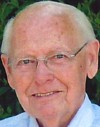 I'm
Gene Millen. In 1990 a highly skilled heart surgeon, sawed open my
chest and stitched in bypasses to six of my favorite heart arteries.
I'm
Gene Millen. In 1990 a highly skilled heart surgeon, sawed open my
chest and stitched in bypasses to six of my favorite heart arteries.
Six heart bypasses isn't’ a
record but it’s not bad for a skinny 59-year-old non-smoker
with normal cholesterol and blood pressure and no family history of
heart disease.
Since my heart bypass operation in 1990, my passion has been to learn exactly what causes heart attacks and strokes and how we can avoid them!
One supplement that you should not be without is Coenzyme Q10!
Dr. Stephen Sinatra, a board certified cardiologist who integrates conventional medicine with nutrition at his New England Heart and Longevity Center says this about CoQ10:
"Coenzyme-Q10, commonly known as CoQ10, is energy on call. I have long considered CoQ10 a wonder nutrient because of its ability to support heart health."
Statin Drugs can
rob you of Co Q10!
If you are taking any of the statin family of drugs to lower your cholesterol you should not be without CoQ10.
Other drugs, such as beta blockers and some antidepressants, also interfere with Coenzyme Q10.
If you are taking Lipitor, Crestor or Vytorin and are not
taking CoQ10 click here.
Coenzyme Q10 (CoQ10) is one of the most potent antioxidants known. It provides the "energizing spark" that enables the heart muscle to pump blood more efficiently, and it's a great scavenger of free radicals.
More than 100 clinical studies at major universities and hospitals have documented the actions of Coenzyme Q10.
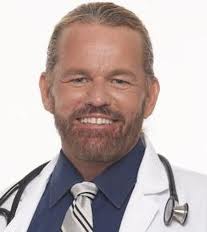
Dr. Al Sears, one of the premier physicians in the country says,
"If You’re Taking the Wrong Kind of CoQ10 You May Be Wasting Your Money!"
"I want to tell you about a meeting I had with the most respected CoQ10 researcher in the world. Dr. Mae from Japan stopped by my offices to talk to me about his latest breakthrough. It’s a new form of Coenzyme Q10 that’s 8 times more powerful than conventional formulations.
"Being 8 times more powerful doesn’t just mean that it’s 8 times better. The truth is more remarkable. This new form of CoQ10 will give you the opportunity to make gains on a scale that defies comparison.
"Conventional CoQ10 works wonders, but the problem I’ve had is keeping my patients’ blood levels high enough. They often require high doses, and that sometimes means taking 4 to 6 capsules a day of at least 200 mg. That’s expensive…
"But this new form, which I call Accel, has the best coenzyme Q10 absorption rate, which lets me give a single 50 mg capsule to the patients who used to need half a dozen. And that’s just the beginning…
"The
best thing is that a new study confirms our "secret"
vitality booster...this
space age pill can actually
double your energy!"
Al Sears, MD
Click here to learn more about this amazing nutrient
PS: My wife and I take Dr. Sears Accel CoQ10 every day.
Nothing is too good for our hearts!
Copyright 2026-2011 Heart-Health-For-Life.com |1609 Duke Drive, Livingston, CA |All Rights Reserved.
Thank you for reviewing this web page about beta
blocker side effects